
Microbiota under the microscope of a gastroenterologist. In what situations should you reach for probiotics? Review article
Article Sidebar
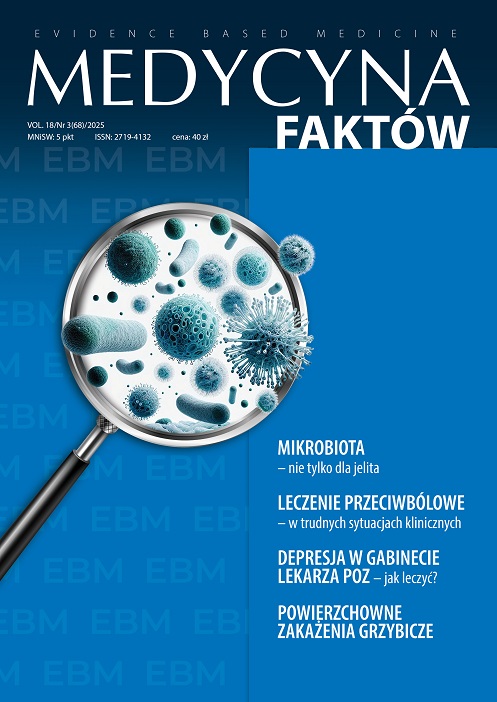
Published:
Nov 30, 2025
Keywords:
probiotics, gut-brain axis, microbiota
Main Article Content
Abstract
Our knowledge of probiotics remains insufficient, despite new research and recommendations for their use. The pharmaceutical market offers a wide range of products with varying indications and compositions, making it often difficult to choose the right one. The following article provides a synthesized overview of the effects probiotics have on the body, as well as suggestions that can help guide the selection of the right product, leading to better therapeutic outcomes.
Article Details
How to Cite
Waśko-Czopnik, D. (2025). Microbiota under the microscope of a gastroenterologist. In what situations should you reach for probiotics?. Medycyna Faktow (J EBM), 18(3(68), 411-416. https://doi.org/10.24292/01.MF.0325.12
Issue
Section
Articles
Copyright by Medical Education. All rights reserved.
References
1. Szajewska H. Probiotyki – aktualny stan wiedzy i zalecenia dla praktyki klinicznej. Med Prakt. 2017; 7-8: 19-37.
2. Lozupone CA, Stombaugh JI, Gordon JI et al. Diversity, stability and resilience of the human gut microbiota. Nature. 2012; 489: 220-30.
3. Hill C, Guarner F, Reid G et al. Expert consensus document: The International Scientific Association for Probiotics and Prebiotics consensus statement on the scope and appropriate use of the term probiotic. Nat Rev Gastroenterol Hepatol. 2014; 11: 506-14.
4. Floch MH, Walker WA, Sanders ME et al. Recommendations for Probiotic Use – 2015 Update: Proceedings and Consensus Opinion. J Clin Gastroenterol. 2015; 49(Suppl 1): S69-73. http://doi.org/ 10.1097/MCG.0000000000000420.
5. Boyle RJ, Robins-Browne RM, Tang ML. Probiotic use in clinical practice: what are the risks? Am J Clin Nutr. 2006; 83(6): 1256-64. http://doi.org/10.1093/ajcn/83.6.1256.
6. Leis R, de Castro MJ, de Lamas C et al. Effects of Prebiotic and Probiotic Supplementation on Lactase Deficiency and Lactose Intolerance: A Systematic Review of Controlled Trials. Nutrients. 2020; 12(5): 1487. http://doi.org/10.3390/nu12051487.
7. Toscano M, De Grandi R, Stronati L et al. Effect of Lactobacillus rhamnosus HN001 and Bifidobacterium longum BB536 on the healthy gut microbiota composition at phyla and species level: A preliminary study. World J Gastroenterol. 2017; 23(15): 2696-704. http://doi.org/10.3748/wjg.v23.i15.2696.
8. Guo Q, Goldenberg JZ, Humphrey C et al. Probiotics for the prevention of pediatric antibiotic-associated diarrhea. Cochrane Database Syst Rev. 2019; 4: CD004827. http://doi.org/10.1002/14651858.CD004827.pub5.
9. Whelan K, Quigley EM. Probiotics in the management of irritable bowel syndrome and inflammatory bowel disease. Curr Opin Gastroenterol. 2013; 29: 184-9. http://doi.org/10.1097/MOG.0b013e32835d7bba .
10. Nelios G, Santarmaki V, Pavlatou C et al. New Wild-Type Lacticaseibacillus rhamnosus Strains as Candidates to Manage Type 1 Diabetes. Microorganisms. 2022; 10(2): 272. http://doi.org/10.3390/microorganisms10020272.
11. Cionci NB, Baffoni L, Gaggia F et al. Therapeutic Microbiology: The Role of Bifidobacterium breve as Food Supplement for the Prevention/Treatment of Paediatric Diseases. Nutrients. 2018; 10(11): 1723.
12. Kędzia A. Działanie probiotyków na organizm człowieka. Cz. II. Zastosowanie probiotyków w leczeniu i profilaktyce chorób. Postępy Fitoterapii. 2009; 1: 50-7.
13. Szajewska H, Kołodziej M. Systematic review with meta-analysis: Saccharomyces boulardii in the prevention of antibiotic-associated diarrhoea. Aliment Pharmacol Ther. 2015; 42(7): 793-801.
14. Szajewska H, Kołodziej M. Systematic review with metaanalysis: Lactobacillus rhamnosus GG in the prevention of antibiotic-associated diarrhoea in children and adults. Aliment Pharmacol Ther. 2015; 42(10): 1149-57.
15. Sapilak BJ. Zasady terapii i racjonalny dobór probiotyku – na przykładzie preparatów synbiotycznych Asecurin. Medycyna Faktów 2022 (Suppl 1): 1-4.
16. Albrecht P, Kotowska M. Antibiotic therapy of gastrointestinal infections. Przewodnik Lekarza/Guide for GPs. 2007; 2: 133-8.
2. Lozupone CA, Stombaugh JI, Gordon JI et al. Diversity, stability and resilience of the human gut microbiota. Nature. 2012; 489: 220-30.
3. Hill C, Guarner F, Reid G et al. Expert consensus document: The International Scientific Association for Probiotics and Prebiotics consensus statement on the scope and appropriate use of the term probiotic. Nat Rev Gastroenterol Hepatol. 2014; 11: 506-14.
4. Floch MH, Walker WA, Sanders ME et al. Recommendations for Probiotic Use – 2015 Update: Proceedings and Consensus Opinion. J Clin Gastroenterol. 2015; 49(Suppl 1): S69-73. http://doi.org/ 10.1097/MCG.0000000000000420.
5. Boyle RJ, Robins-Browne RM, Tang ML. Probiotic use in clinical practice: what are the risks? Am J Clin Nutr. 2006; 83(6): 1256-64. http://doi.org/10.1093/ajcn/83.6.1256.
6. Leis R, de Castro MJ, de Lamas C et al. Effects of Prebiotic and Probiotic Supplementation on Lactase Deficiency and Lactose Intolerance: A Systematic Review of Controlled Trials. Nutrients. 2020; 12(5): 1487. http://doi.org/10.3390/nu12051487.
7. Toscano M, De Grandi R, Stronati L et al. Effect of Lactobacillus rhamnosus HN001 and Bifidobacterium longum BB536 on the healthy gut microbiota composition at phyla and species level: A preliminary study. World J Gastroenterol. 2017; 23(15): 2696-704. http://doi.org/10.3748/wjg.v23.i15.2696.
8. Guo Q, Goldenberg JZ, Humphrey C et al. Probiotics for the prevention of pediatric antibiotic-associated diarrhea. Cochrane Database Syst Rev. 2019; 4: CD004827. http://doi.org/10.1002/14651858.CD004827.pub5.
9. Whelan K, Quigley EM. Probiotics in the management of irritable bowel syndrome and inflammatory bowel disease. Curr Opin Gastroenterol. 2013; 29: 184-9. http://doi.org/10.1097/MOG.0b013e32835d7bba .
10. Nelios G, Santarmaki V, Pavlatou C et al. New Wild-Type Lacticaseibacillus rhamnosus Strains as Candidates to Manage Type 1 Diabetes. Microorganisms. 2022; 10(2): 272. http://doi.org/10.3390/microorganisms10020272.
11. Cionci NB, Baffoni L, Gaggia F et al. Therapeutic Microbiology: The Role of Bifidobacterium breve as Food Supplement for the Prevention/Treatment of Paediatric Diseases. Nutrients. 2018; 10(11): 1723.
12. Kędzia A. Działanie probiotyków na organizm człowieka. Cz. II. Zastosowanie probiotyków w leczeniu i profilaktyce chorób. Postępy Fitoterapii. 2009; 1: 50-7.
13. Szajewska H, Kołodziej M. Systematic review with meta-analysis: Saccharomyces boulardii in the prevention of antibiotic-associated diarrhoea. Aliment Pharmacol Ther. 2015; 42(7): 793-801.
14. Szajewska H, Kołodziej M. Systematic review with metaanalysis: Lactobacillus rhamnosus GG in the prevention of antibiotic-associated diarrhoea in children and adults. Aliment Pharmacol Ther. 2015; 42(10): 1149-57.
15. Sapilak BJ. Zasady terapii i racjonalny dobór probiotyku – na przykładzie preparatów synbiotycznych Asecurin. Medycyna Faktów 2022 (Suppl 1): 1-4.
16. Albrecht P, Kotowska M. Antibiotic therapy of gastrointestinal infections. Przewodnik Lekarza/Guide for GPs. 2007; 2: 133-8.