
Use of atomoxetine in people with ADHD Review article
Article Sidebar
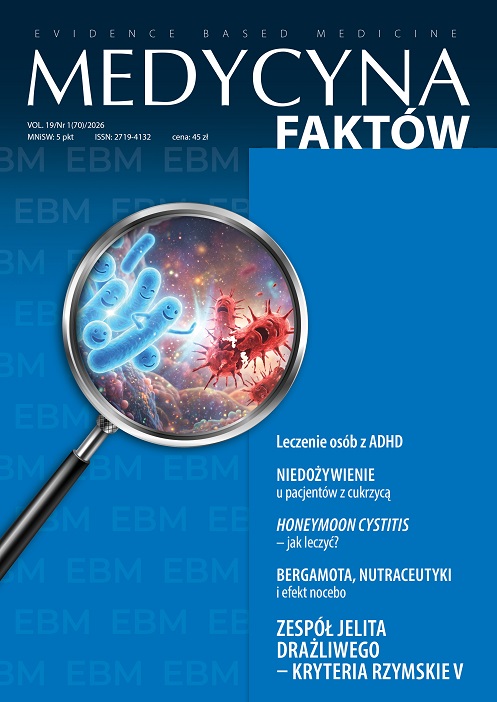
Main Article Content
Abstract
This article discusses the use of atomoxetine in the treatment of ADHD in adults, particularly in situations where psychostimulants are contraindicated, ineffective, or poorly tolerated. Atomoxetine works by inhibiting norepinephrine reuptake and indirectly increases the availability of dopamine in the prefrontal cortex, which improves concentration, impulse control, and reduces hyperactivity. Unlike psychostimulants, its effects develop gradually – the first benefits usually appear after a few weeks, and the full effect after approximately three months. The drug is particularly useful in patients with ADHD comorbid with anxiety, depression, a history of addiction, or a risk of stimulant abuse. The article emphasizes the need for cautious dosing, especially in individuals who are slow metabolizers or taking CYP2D6 inhibitors, due to the risk of adverse effects. The possibility of combination therapy with atomoxetine and methylphenidate is also discussed, primarily when monotherapy is insufficient. The clinical cases presented demonstrate the effectiveness of atomoxetine in patients in whom methylphenidate caused severe anxiety or psychotic symptoms. In summary, atomoxetine is a valuable and safe alternative to psychostimulants and an important tool in the individualized treatment of ADHD.
Article Details
Copyright by Medical Education. All rights reserved.
References
2. Gondek TM. Zastosowanie atomoksetyny jako preferowanego leku u dorosłych z ADHD w praktyce klinicznej. Medycyna Faktów. 2025; 1(66): 134-9. http://doi.org/10.24292/01.MF.0125.20.
3. Creighton CJ, Ramabadran K, Ciccone PE et al. Synthesis and biological evaluation of the major metabolite of atomoxetine: elucidation of a partial kappa-opioid agonist effect. Bioorg Med Chem Lett. 2004; 14(15): 4083-5. http://doi.org/10.1016/j.bmcl.2004.05.018.
4. Sauer JM, Ring BJ, Witcher JW. Clinical pharmacokinetics of atomoxetine. Clin Pharmacokinet. 2005; 44(6): 571-90. http://doi.org/10.2165/00003088-200544060-00002.
5. Stahl SM. Stahl’s Essential Psychopharmacology: Neuroscientific Basis and Practical Applications. 5th ed. Cambridge University Press, 2021.
6. Wietecha LA, Clemow DB, Buchanan AS et al. Atomoxetine Increased Effect over Time in Adults with Attention-Deficit/Hyperactivity Disorder Treated for up to 6 Months: Pooled Analysis of Two Double-Blind, Placebo-Controlled, Randomized Trials. CNS Neurosci Ther. 2016; 22(7): 546-57. http://doi.org/10.1111/cns.12533.
7. APILAM. Atomoxetine Hydrochloride. At: e-lactancia.org. APILAM: association for promotion of and cultural and scientific research into breastfeeding; 2002 updated 14 Apr 2026.
8. Wolańczyk T, Brzozowska Z. Łączenie metylofenidatu i atomoksetyny w terapii zespołu nadpobudliwości psychoruchowej – narracyjny przegląd piśmiennictwa. Psychiatr Psychol Klin. 2021; 21: 274-80.
9. Cheng T, Boileau AJ. Effectiveness of Atomoxetine and Stimulant Combination in Attention-Deficit/Hyperactivity Disorder (ADHD) Treatment: A Systematic Review. Cureus. 2025; 17(2): e79378.
10. Clemow DB, Nyhuis AW, Robinson RL. Clinical Impact of Not Achieving Recommended Dose on Duration of Atomoxetine Treatment in Adults with Attention-Deficit/Hyperactivity Disorder. CNS Neurosci Ther. 2016; 22(12): 970-8. http://doi.org/10.1111/cns.12595.
11. Ozbaran B, Kose S, Yuzuguldu O et al. Combined methylphenidate and atomoxetine pharmacotherapy in attention deficit hyperactivity disorder. World J Biol Psychiatry. 2015; 16(8): 619-24. http://doi.org/10.3109/15622975.2015.1051109.
12. Park HN, Kong NY, Kim HC et al. Effectiveness and Tolerability of Combination Pharmacotherapy With Stimulant and Non-Stimulant in Children With Attention Deficit Hyperactivity Disorder. J Korean Acad Child Adolesc Psychiatry. 2024; 35(1): 82-9. http://doi.org/10.5765/jkacap.230048.
13. Bahn GH, Seo K. Combined Medication with Stimulants and Non-stimulants for Attention-deficit/hyperactivity Disorder. Clin Psychopharmacol Neurosci. 2021; 19(4): 705-11. http://doi.org/10.9758/cpn.2021.19.4.705.
14. Clemow DB, Mason OW, Sarkis EH et al. Atomoxetine monotherapy compared with combination therapy for the treatment of ADHD: a retrospective chart review study. Expert Rev Neurother. 2015; 15(11): 1353-66. http://doi.org/10.1586/14737175.2015.1102060.
15. Ishizuya A, Enomoto M, Tachimori H et al. Risk factors for low adherence to methylphenidate treatment in pediatric patients with attention-deficit/hyperactivity disorder. Sci Rep. 2021; 11(1): 1707. http://doi.org/10.1038/s41598-021-81416-z.