
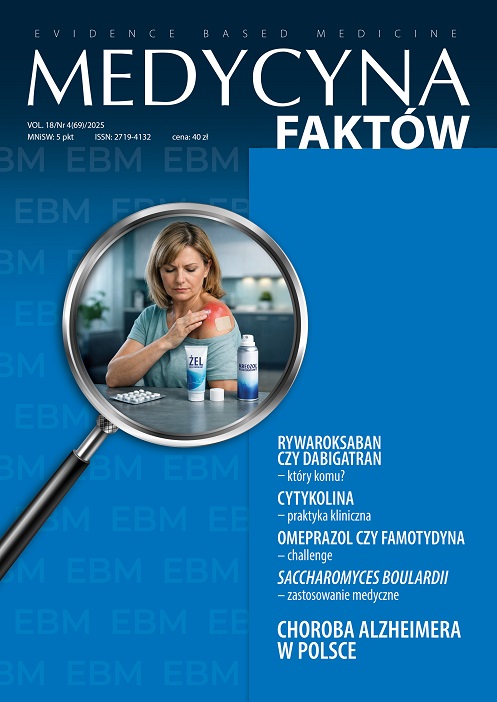
Supplementation of Saccharomyces boulardii in the management of diarrheal disease of various origins Review article
Article Sidebar
Main Article Content
Abstract
Diarrhea is a common public health problem for both adults and children, that is one of the main reasons for medical visits, especially in younger populations and individuals experiencing acute symptoms caused by infections. Standard management with oral rehydration solutions and zinc supplementation effectively reduces the risk of severe dehydration and shortens the duration of episodes, but does not fully address persistent intestinal dysfunction. Increasing evidence indicates that intestinal microbiota dysbiosis and impaired gut barrier function are key factors in the pathophysiology of diarrhea, supporting the use of probiotics as an adjunctive therapy. Saccharomyces boulardii is the only yeast probiotic whose efficacy in treating diarrhea has been demonstrated in randomized clinical trials. The CNCM I-3799 strain is characterized by high cell viability and product stability, ensuring consistent clinical effects. Its mechanisms of action include neutralization of bacterial toxins, inhibition of pathogen colonization, support for microbiota restoration, reinforcement of intestinal epithelial tight junctions, and modulation of host immune responses. The yeast also limits Candida albicans overgrowth by preventing biofilm formation and activating immune defenses. Clinical studies show that S. boulardii CNCM I-3799 reduces the duration of acute diarrhea by approximately 30 h and accelerates recovery. In the prevention of antibiotic-associated and travel-related diarrhea, it demonstrates significant efficacy in both children and adults, with minimal adverse effects. The yeast does not permanently colonize the gut and is eliminated after supplementation. Saccharomyces boulardii CNCM I-3799 represents an effective and safe adjunct for the treatment and prevention of diarrhea, providing multifaceted support for intestinal homeostasis and improved clinical outcomes in patients with vulnerable gut function.
Article Details
Copyright by Medical Education. All rights reserved.
References
2. Mourey F, Sureja V, Kheni D et al. A Multicenter, Randomized, Double-blind, Placebo-controlled Trial of Saccharomyces boulardii in Infants and Children With Acute Diarrhea. Pediatr Infect Dis J. 2020; 39(11): e347-51. http://doi.org/10.1097/INF.0000000000002849.
3. Fu J, Liu J, Wen X et al. Unique Probiotic Properties and Bioactive Metabolites of Saccharomyces boulardii. Probiotics Antimicrob Proteins. 2023; 15(4): 967-82. http://doi.org/10.1007/s12602-022-09953-1.
4. McFarland LV, Li T. Efficacy and safety of Saccharomyces boulardii CNCM 1-745 for the treatment of pediatric acute diarrhea in China: a systematic review and meta-analysis. Front Cell Infect Microbiol. 2025; 15: 1587792. http://doi.org/10.3389/fcimb.2025.1587792.
5. Czerucka D, Rampal P. Diversity of Saccharomyces boulardii CNCM I-745 mechanisms of action against intestinal infections. World J Gastroenterol. 2019; 25(18): 2188-203. http://doi.org/10.3748/wjg.v25.i18.2188.
6. Pais P, Almeida V, Yılmaz M et al. Saccharomyces boulardii: What Makes It Tick as Successful Probiotic? J Fungi (Basel). 2020; 6(2): 78. http://doi.org/10.3390/jof6020078.
7. Kelesidis T, Pothoulakis C. Efficacy and safety of the probiotic Saccharomyces boulardii for the prevention and therapy of gastrointestinal disorders. Ther Adv Gastroenterol. 2012; 5(2): 111-25. http://doi.org/10.1177/1756283X11428502.
8. Moré MI, Swidsinski A. Saccharomyces boulardii CNCM I-745 supports regeneration of the intestinal microbiota after diarrheic dysbiosis – a review. Clin Exp Gastroenterol. 2015; 8: 237-55. http://doi.org/10.2147/CEG.S85574.
9. Jawhara S, Habib K, Maggiotto F et al. Modulation of Intestinal Inflammation by Yeasts and Cell Wall Extracts: Strain Dependence and Unexpected Anti-Inflammatory Role of Glucan Fractions. PLoS One. 2012; 7(7): e40648. http://doi.org/10.1371/journal.pone.0040648.
10. Ghosh A, Sundaram B, Bhattacharya P et al. Effect of Saccharomyces boulardii CNCM-I 3799 and Bacillus subtilis CU-1 on Acute Watery Diarrhea: A Randomized Double-Blind Placebo-Controlled Study in Indian Children. Pediatr Gastroenterol Hepatol Nutr. 2021; 24(5): 423-31. http://doi.org/10.5223/pghn.2021.24.5.423.
11. Wang D, Li C, Lai J et al. Therapeutic potential of Saccharomyces boulardii in alleviating gastrointestinal stress through preservation of intestinal cell membrane integrity. BMC Microbiol. 2025; 25(1): 359. http://doi.org/10.1186/s12866-025-03984-8.
12. Waitzberg D, Guarner F, Hojsak I et al. Can the Evidence-Based Use of Probiotics (Notably Saccharomyces boulardii CNCM I-745 and Lactobacillus rhamnosus GG) Mitigate the Clinical Effects of Antibiotic-Associated Dysbiosis? Adv Ther. 2024; 41(3): 901-14. http://doi.org/10.1007/s12325-024-02783-3.
13. bbMcFarland LV. Systematic review and meta-analysis of Saccharomyces boulardii in adult patients. World J Gastroenterol. 2010; 16(18): 2202-22. http://doi.org/10.3748/wjg.v16.i18.2202.
14. Li M, Xie Y. Efficacy and safety of Saccharomyces boulardii as an adjuvant therapy for the eradication of Helicobacter pylori: a meta-analysis. Front Cell Infect Microbiol. 2025; 15: 1441185. http://doi.org/10.3389/fcimb.2025.1441185.
15. Ling H, Liu R, Sam QH et al. Engineering of a probiotic yeast for the production and secretion of medium-chain fatty acids antagonistic to an opportunistic pathogen Candida albicans. Front Bioeng Biotechnol. 2023; 11: 1090501. http://doi.org/10.3389/fbioe.2023.1090501.
16. Wei Y, Qiu J, Han Z et al. Antifungal bio-coating of endotracheal tube built by overexpressing the MCP1 gene of Saccharomyces boulardii and employing hydrogel as a „house” to antagonize Candida albicans. Biomater Res. 2023; 27(1): 97. http://doi.org/10.1186/s40824-023-00443-1.
17. Murzyn A, Krasowska A, Stefanowicz P et al. Capric acid secreted by S. boulardii inhibits C. albicans filamentous growth, adhesion and biofilm formation. PLoS One. 2010; 5(8): e12050. http://doi.org/10.1371/journal.pone.0012050.
18. Abid R, Waseem H, Ali J et al. Probiotic Yeast Saccharomyces: Back to Nature to Improve Human Health. J Fungi (Basel). 2022; 8(5): 444. http://doi.org/10.3390/jof8050444.
19. Szajewska H, Kołodziej M, Zalewski BM. Systematic review with meta-analysis: Saccharomyces boulardii for treating acute gastroenteritis in children – a 2020 update. Aliment Pharmacol Ther. 2020; 51(7): 678-88. http://doi.org/10.1111/apt.15659.
20. Szajewska H, Canani RB, Guarino A et al. Probiotics for the Prevention of Antibiotic-Associated Diarrhea in Children. J Pediatr Gastroenterol Nutr. 2016; 62(3): 495-506. http://doi.org/10.1097/MPG.0000000000001081.
21. Szajewska H. Saccharomyces boulardii – aktualne dane naukowe. Prz Gastroenterol. 2012; 7(6): 351-8. http://doi.org/10.5114/pg.2012.33042.
22. McFarland LV, Srinivasan R, Setty RP et al. Specific Probiotics for the Treatment of Pediatric Acute Gastroenteritis in India: A Systematic Review and Meta-Analysis. JPGN Rep. 2021; 2(3): e079. http://doi.org/10.1097/PG9.0000000000000079.
23. Chitapanarux T, Wiracha U, Winichakoon P et al. Efficacy and safety of Saccharomyces boulardii as adjunct therapy with Vancomycin in treating Clostridioides difficile infection: A randomized controlled trial. Sci Rep. 2025; 15: 19326. https://doi.org/10.1038/s41598-025-04986-2.
24. Maev I, Andreev D, Shaburov R et al. [Study on the efficacy of combination therapy with rifaximin and Saccharomyces boulardii CNCM I-745 in patients with small intestinal bacterial overgrowth associated with long-term use of proton pump inhibitors]. Terapevticheskii arkhiv. 2025; 97(8): 660-7. https://doi.org/10.26442/00403660.2025.08.203301.