
Citicoline in clinical practice Review article
Article Sidebar
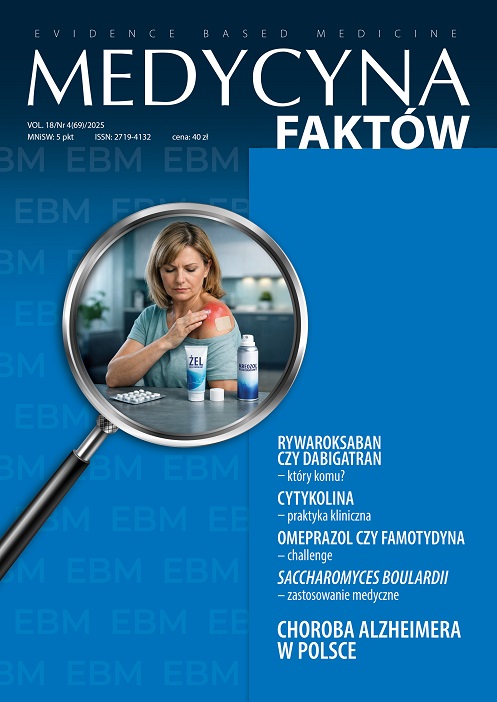
Main Article Content
Abstract
Citicoline (cytidine-5’-diphosphocholine, CDP-choline) is a neuromodulator with a well-described pharmacological profile, exhibiting neuroprotective and neuroregenerative effects across a range of clinical conditions. As a precursor of membrane phospholipids, it contributes to the maintenance of neuronal integrity, myelin sheath stability, and proper cholinergic neurotransmission. Its mechanisms of action include enhancement of phosphatidylcholine synthesis, improvement of mitochondrial bioenergetics, reduction of oxidative stress, modulation of neurotransmission, and attenuation of microglial activation. Preclinical and clinical evidence indicate that citicoline supports repair processes in acute central nervous system injuries, such as ischemic stroke and traumatic brain injury, by promoting neuronal plasticity and metabolic stability. In chronic cognitive disorders of vascular, neurodegenerative, and post-COVID-19 origin, its use has been associated with improvements in cognitive performance, particularly in memory, attention, and executive functions. In ophthalmology, citicoline has demonstrated beneficial effects on retinal ganglion cell function, visual pathway conduction, and the progression of neurodegeneration in glaucoma and diabetic retinopathy. Citicoline is characterized by a favorable safety profile, with infrequent and generally mild adverse effects, confirmed across diverse patient populations. Overall, current evidence supports citicoline as a relevant component of contemporary neuroprotective strategies targeting phospholipid metabolism and mitochondrial function in both neurological and ophthalmic disorders.
Article Details
Copyright by Medical Education. All rights reserved.
References
2. Secades JJ, Trimmel H, Salazar B et al. Citicoline for the management of patients with traumatic brain injury in the acute phase: a systematic review and meta-analysis. Life (Basel). 2023; 13(2): 369. http://doi.org/10.3390/life13020369.
3. Chen Q, Chen X, Li Z et al. SLC44A1 deficiency impedes myelin development in the central nervous system. Cell Rep. 2025; 44(12): 116617. http://doi.org/10.1016/j.celrep.2025.116617.
4. Abdel-Aziz N, Algeda FR, Shedid SM. The impact of citicoline on brain mitochondrial dysfunction induced in rats after head irradiation. Sci Rep. 2025; 15(1): 25658. http://doi.org/10.1038/s41598-025-11098-4.
5. Świątkiewicz M, Grieb P. Citicoline for supporting memory in aging humans. Aging Dis. 2023; 14(4): 1184-95. http://doi.org/10.14336/AD.2022.1216.
6. Liu Z, Ang GS. Nutraceuticals and neuroprotection for glaucoma – introducing the NP-10 system. Ther Adv Ophthalmol. 2025; 17: 25158414251393125. http://doi.org/10.1177/25158414251393125.
7. Matamoros JA, Rubio-Casado S, Fernández-Albarral JA et al. Citicoline and coenzyme Q10: therapeutic agents for glial activation reduction in ocular hypertension. Pharmaceuticals (Basel). 2025; 18(5): 694. http://doi.org/10.3390/ph18050694.
8. Giunta P, D’Andrea L, Rinaldi M et al. Impact of oral citicoline, antioxidant vitamins, and blackcurrant supplementation on primary open-angle glaucoma: an OCT and OCTA study. Biomedicines. 2025; 13(6): 1352. http://doi.org/10.3390/biomedicines13061352.
9. Mahmoodkhani M, Aminmansour B, Shafiei M et al. Citicoline on the Barthel Index: severe and moderate brain injury. Indian J Pharmacol. 2023; 55(4): 223-8. http://doi.org/10.4103/ijp.ijp_492_22.
10. Premi E, Cantoni V, Benussi A et al. Citicoline treatment in acute ischemic stroke: a randomized, single-blind TMS study. Front Neurol. 2022; 13: 915362. http://doi.org/10.3389/fneur.2022.915362.
11. Badre DSEM, Elbeialy MAK, Fathy M. Citicoline-amantadine trial in traumatic brain injury: a prospective randomized study. J Neurotrauma. 2025. http://doi.org/10.1177/08977151251375914.
12. Bermejo PE, Dorado R, Zea-Sevilla MA. Role of citicoline in patients with mild cognitive impairment. Neurosci Insights. 2023; 18: 26331055231152496. http://doi.org/10.1177/26331055231152496.
13. Dimitrova M, Marinova Y, Dilkov D. Investigation of cognitive impairment in the course of post-COVID syndrome. Diagnostics (Basel). 2023; 13(16): 2703. http://doi.org/10.3390/diagnostics13162703.
14. Tomić M, Babić T, Bulum T et al. Citicoline may effectively reduce hard exudates in diabetic retinopathy. Biomedicines. 2025; 13(10): 2358. http://doi.org/10.3390/biomedicines13102358.
15. Rossi GCM, Rinaldi M, Matarazzo F et al. Randomized, crossover, multicenter, single-blind study comparing citicoline-based formulations on PERG and quality of life in primary open-angle glaucoma. J Clin Med. 2025; 14(11): 3774. http://doi.org/10.3390/jcm14113774.
16. Fellner Z, Kurilová V, Takáčová A et al. Neuroprotective properties of citicoline in patients with unexplained visual acuity loss related to silicone oil tamponade. Cesk Slov Oftalmol. 2025; 81: 1-11. http://doi.org/10.31348/2025/36.
17. Guan YY, Yang J, Qi YM et al. Mining and evaluation of security alert signals of neuroprotective agents based on the Jinan adverse event reporting system database. Front Pharmacol. 2025; 16: 1529923. http://doi.org/10.3389/fphar.2025.1529923.
18. Zare S, Reihani H, Sarvestani RT et al. Effects of citicoline in children with autism spectrum disorder: a randomized, open-label clinical trial. J Autism Dev Disord. 2025. http://doi.org/10.1007/s10803-025-06936-3.
19. Salah R, El-Sayed G, El-Sherbini ES, El-Adl M. Ameliorative effect of citicoline on cyclophosphamide-induced lung injury. Open Vet J. 2025; 15(5): 2218-2229. http://doi.org/10.5455/OVJ.2025.v15.i5.39.
20. Kang Y, Yang T, Chen X et al. MYH2-associated myopathy caused by novel compound heterozygous mutations: a case report and literature review. J Hum Genet. 2025; 70(12): 655-9. http://doi.org/10.1038/s10038-025-01400-7.