Intensywna terapia statynowa z użyciem rosuwastatyny: u jakich pacjentów przynosi największe korzyści? Profile pacjentów Artykuł przeglądowy
##plugins.themes.bootstrap3.article.sidebar##
Opublikowane:
maj 31, 2026
Słowa kluczowe:
rosuwastatyna, LDL-cholesterol, prewencja pierwotna, hipercholesterolemia rodzinna
##plugins.themes.bootstrap3.article.main##
Abstrakt
Rosuwastatyna jest inhibitorem reduktazy 3-hydroksy-3-metyloglutarylokoenzymu A. Zmniejsza stężenie frakcji LDL cholesterolu, całkowite stężenie cholesterolu i stężenie triglicerydów oraz zwiększa stężenie frakcji HDL. Spośród wszystkich statyn najsilniej obniża stężenie LDL-cholesterolu, dlatego jest preferowana do stosowania w intensywnej terapii hipolipemizującej. Rosuwastatyna jest lekiem o udowodnionej skuteczności w prewencji pierwotnej u pacjentów dużego ryzyka sercowo-naczyniowego, w tym w leczeniu rodzinnej hipercholesterolemii. Zalecana do stosowania u pacjentów pediatrycznych ze względu na dobrą tolerancję i bezpieczeństwo.
##plugins.themes.bootstrap3.article.details##
Jak cytować
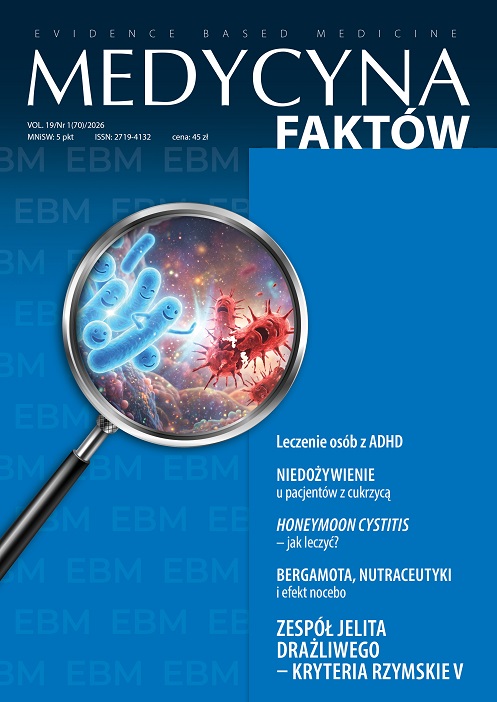
Dyrla, W., & Kuch, M. (2026). Intensywna terapia statynowa z użyciem rosuwastatyny: u jakich pacjentów przynosi największe korzyści? Profile pacjentów. Medycyna Faktów , 19(1(70), 112-116. https://doi.org/10.24292/01.MF.0126.15
Numer
Dział
Artykuły
Copyright by Medical Education. All rights reserved.
Bibliografia
1. Charakterystyka Produktu Leczniczego. Crestor.
2. 2025 Focused Update of the 2019 ESC/EAS Guidelines for the management of dyslipidaemias Developed by the task force for the management of dyslipidaemias of the European Society of Cardiology (ESC) and the European Atherosclerosis Society (EAS). Eur Heart J. 2025; 46: 4359-78.
3. Cholesterol Treatment Trialists’ (CTT) Collaboration; Baigent C, Blackwell L et al. Efficacy and safety of more intensive lowering of LDL cholesterol: a meta-analysis of data from 170,000 participants in 26 randomised trials. Lancet. 2010; 376: 1670-81.
4. Wang N, Woodward M, Huffman MD et al. Compounding benefits of cholesterol-lowering therapy for the reduction of major cardiovascular events: systematic review and meta-analysis. Circ Cardiovasc Qual Outcomes. 2022; 15: e008552.
5. Ridker PM, Danielson E, Fonseca FA et al.; JUPITER Study Group. Rosuvastatin to prevent vascular events in men and women with elevated C‑reactive protein. N Engl J Med. 2008; 359: 2195-207.
6. Crouse JR, Raichlen JS, Riley WA et al.; METEOR Study Group. Effect of rosuvastatin on progression of carotid intima-media thickness in lo-risk individuals with subclinical atherosclerosis: the METEOR Trial. JAMA. 2007; 297(12): 1344-53.
7. Stein EA, Dann EJ, Wiegman A et al. Efficacy of Rosuvastatin in Children With Homozygous Familial Hypercholesterolemia and Association With Underlying Genetic Mutations. JACC. 2017; 70(9): 1162-1170.
8. Braamskamp M, Langslet G, McCrindle BW et al. Efficacy and safety of rosuvastatin therapy in children and adolescents with familial hypercholesterolemia: Results from the CHARON study. J Clin Lipidol. 2015; 9: 447.
9. Marais DA , Raal FJ, Stein EA et al. A dose-titration and comparative study of rosuvastatin and atorvastatin in patients with homozygous familial hypercholesterolaemia. Atherosclerosis. 2008; 197(1): 400-6.
10. Braamskamp M, Langslet G, McCrindle BW et al. Effect of rosuvastatin on carotid intima‑media thickness in children with heterozygous familial hypercholesterolemia: the CHARON study (Hypercholesterolemia in Children and Adolescents Taking Rosuvastatin Open Label). Circulation. 2017; 136: 359-66.
11. Zhang X, Xing L, Jia X et al. Comparative lipid-lowering/ increasing efficacy of 7 statins in patients with dyslipidemia, cardiovascular diseases, or diabetes mellitus: systematic review and network meta-analyses of 50 randomized controlled trials. Cardiovasc Ther. 2020; 2020: 3987065.
12. Jones PH, Davidson MH, Stein EA et al.; STELLAR Study Group. Comparison of the efficacy and safety of rosuvastatin versus atorvastatin, simvastatin, and pravastatin across doses (STELLAR* Trial). Am J Cardiol. 2003; 92: 152-60.
13. Writing Committee Members; Blumenthal RS, Morris PB, Gaudino M et al.; Peer Review Committee Members. 2026 ACC/AHA/AACVPR/ABC/ ACPM/ADA/AGS/APhA/ASPC/NLA/PCNA Guideline on the Management of Dyslipidemia: A Report of the American College of Cardiology/ American Heart Association Joint Committee on Clinical Practice Guidelines. Circulation. 2026 Mar 13; doi: 10.1161/CIR.0000000000001423.
14. Mach F, Baigent C, Catapano AL et al. Wytyczne ESC/EAS dotyczące postępowania w dyslipidemiach: jak dzięki leczeniu zaburzeń lipidowych obniżyć ryzyko sercowo‑naczyniowe (2019). Polish Heart Journal (Kardiologia Polska). 2020 78(III): 12-103.
2. 2025 Focused Update of the 2019 ESC/EAS Guidelines for the management of dyslipidaemias Developed by the task force for the management of dyslipidaemias of the European Society of Cardiology (ESC) and the European Atherosclerosis Society (EAS). Eur Heart J. 2025; 46: 4359-78.
3. Cholesterol Treatment Trialists’ (CTT) Collaboration; Baigent C, Blackwell L et al. Efficacy and safety of more intensive lowering of LDL cholesterol: a meta-analysis of data from 170,000 participants in 26 randomised trials. Lancet. 2010; 376: 1670-81.
4. Wang N, Woodward M, Huffman MD et al. Compounding benefits of cholesterol-lowering therapy for the reduction of major cardiovascular events: systematic review and meta-analysis. Circ Cardiovasc Qual Outcomes. 2022; 15: e008552.
5. Ridker PM, Danielson E, Fonseca FA et al.; JUPITER Study Group. Rosuvastatin to prevent vascular events in men and women with elevated C‑reactive protein. N Engl J Med. 2008; 359: 2195-207.
6. Crouse JR, Raichlen JS, Riley WA et al.; METEOR Study Group. Effect of rosuvastatin on progression of carotid intima-media thickness in lo-risk individuals with subclinical atherosclerosis: the METEOR Trial. JAMA. 2007; 297(12): 1344-53.
7. Stein EA, Dann EJ, Wiegman A et al. Efficacy of Rosuvastatin in Children With Homozygous Familial Hypercholesterolemia and Association With Underlying Genetic Mutations. JACC. 2017; 70(9): 1162-1170.
8. Braamskamp M, Langslet G, McCrindle BW et al. Efficacy and safety of rosuvastatin therapy in children and adolescents with familial hypercholesterolemia: Results from the CHARON study. J Clin Lipidol. 2015; 9: 447.
9. Marais DA , Raal FJ, Stein EA et al. A dose-titration and comparative study of rosuvastatin and atorvastatin in patients with homozygous familial hypercholesterolaemia. Atherosclerosis. 2008; 197(1): 400-6.
10. Braamskamp M, Langslet G, McCrindle BW et al. Effect of rosuvastatin on carotid intima‑media thickness in children with heterozygous familial hypercholesterolemia: the CHARON study (Hypercholesterolemia in Children and Adolescents Taking Rosuvastatin Open Label). Circulation. 2017; 136: 359-66.
11. Zhang X, Xing L, Jia X et al. Comparative lipid-lowering/ increasing efficacy of 7 statins in patients with dyslipidemia, cardiovascular diseases, or diabetes mellitus: systematic review and network meta-analyses of 50 randomized controlled trials. Cardiovasc Ther. 2020; 2020: 3987065.
12. Jones PH, Davidson MH, Stein EA et al.; STELLAR Study Group. Comparison of the efficacy and safety of rosuvastatin versus atorvastatin, simvastatin, and pravastatin across doses (STELLAR* Trial). Am J Cardiol. 2003; 92: 152-60.
13. Writing Committee Members; Blumenthal RS, Morris PB, Gaudino M et al.; Peer Review Committee Members. 2026 ACC/AHA/AACVPR/ABC/ ACPM/ADA/AGS/APhA/ASPC/NLA/PCNA Guideline on the Management of Dyslipidemia: A Report of the American College of Cardiology/ American Heart Association Joint Committee on Clinical Practice Guidelines. Circulation. 2026 Mar 13; doi: 10.1161/CIR.0000000000001423.
14. Mach F, Baigent C, Catapano AL et al. Wytyczne ESC/EAS dotyczące postępowania w dyslipidemiach: jak dzięki leczeniu zaburzeń lipidowych obniżyć ryzyko sercowo‑naczyniowe (2019). Polish Heart Journal (Kardiologia Polska). 2020 78(III): 12-103.