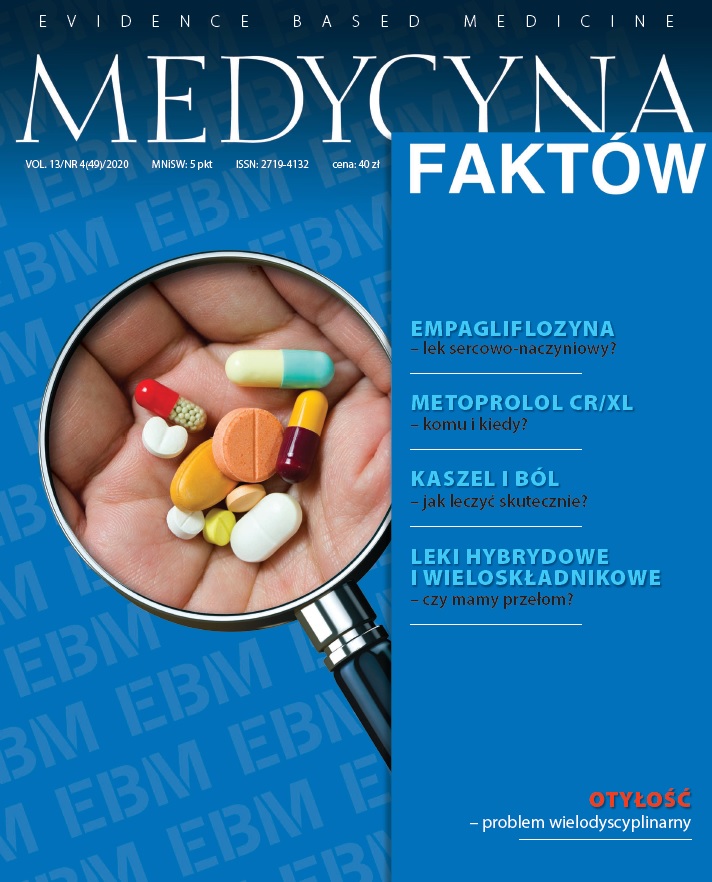
Co dla lekarza POZ oznacza badanie EMPA-REG OUTCOME? Artykuł przeglądowy
##plugins.themes.bootstrap3.article.sidebar##
Opublikowane:
gru 31, 2020
Słowa kluczowe:
cukrzyca, ryzyko sercowo-naczyniowe, empagliflozyna
##plugins.themes.bootstrap3.article.main##
Abstrakt
W pracy przybliżamy wnioski płynące z 3-letniego badania EMPA-REG OUTCOME, w którym chorym na cukrzycę typu 2 z wysokim ryzykiem sercowo-naczyniowym do terapii dołączano empagliflozynę.
##plugins.themes.bootstrap3.article.details##
Jak cytować
Sapilak , B. J., Mastalerz-Migas, A., & Dzida , G. (2020). Co dla lekarza POZ oznacza badanie EMPA-REG OUTCOME?. Medycyna Faktów , 13(4(49), 395-398. https://doi.org/10.24292/01.MF.0420.2
Numer
Dział
Artykuły
Copyright by Medical Education. All rights reserved.
Bibliografia
1. Sarwar N, Gao P, Seshasai SR et al. Diabetes mellitus, fasting blood glucose concentration, and risk of vascular disease: a collaborativevmeta-analysis of 102 prospective studies. Lancet. 2010; 375: 2215-22.
2. The Action to Control Cardiovascular Risk in Diabetes Study Group. Effects of intensive glucose lowering in type 2 diabetes. N Engl J Med. 2008; 358: 2545-59.
3. The ADVANCE Collaborative Group: Intensive blood glucose control and vascular outcomes in patients with type 2 diabetes. N Engl J Med. 2008; 358: 2560-72.
4. Duckworth W, Abraira C, Moritz T et al. Glucose control and vascular complications in veterans with type 2 diabetes. N Engl J Med. 2009; 360: 129-39.
5. Inzucchi SE, Zinman B, Wanner C et al. SGLT-2 inhibitors and cardiovascular risk: Proposed pathways and review of ongoing outcome trials. Diab Vasc Dis Res. 2015; 12: 90-100.
6. Zinman B, Wanner C, Lachin JM et al. Empagliflozin, Cardiovascular Outcomes, and Mortality in Type 2 Diabetes. N Engl J Med. 2015; 373(22): 2117-28. http://doi.org/10.1056/NEJMoa1504720.
7. Fitchett D, Zinman B, Wanner C et al. Heart failure outcomes with empagliflozin in patients with type 2 diabetes at high cardiovascular risk: results of the EMPA-REG OUTCOME? trial. Eur Heart J. 2016; 37(19): 1526-34.
8. Perreault L. EMPA-REG OUTCOME: the endocrinologist?spoint of view. Am J Med. 2017; 130(6S): S51-S6. http://doi.org/10.1016/j.amjmed.2017.04.005.
9. Bays H. Sodium glucose co-transporter type 2 (SGLT2) inhibitors: targeting the kidney to improve glycemic control in diabetes mellitus. Diabetes Ther. 2013; 4: 195-220.
10. Tahrani AA, Barnett AH, Bailey CJ. SGLT inhibitors in management of diabetes. Lancet Diabetes Endocrinol. 2013; 2: 140-51.
11. Hasan FM, Alsahli M, Gerich J.E. SGLT2 inhibitors in the treatment of type 2 diabetes. Diab Res Clin Pract. 2014; 104: 297-322.
2. The Action to Control Cardiovascular Risk in Diabetes Study Group. Effects of intensive glucose lowering in type 2 diabetes. N Engl J Med. 2008; 358: 2545-59.
3. The ADVANCE Collaborative Group: Intensive blood glucose control and vascular outcomes in patients with type 2 diabetes. N Engl J Med. 2008; 358: 2560-72.
4. Duckworth W, Abraira C, Moritz T et al. Glucose control and vascular complications in veterans with type 2 diabetes. N Engl J Med. 2009; 360: 129-39.
5. Inzucchi SE, Zinman B, Wanner C et al. SGLT-2 inhibitors and cardiovascular risk: Proposed pathways and review of ongoing outcome trials. Diab Vasc Dis Res. 2015; 12: 90-100.
6. Zinman B, Wanner C, Lachin JM et al. Empagliflozin, Cardiovascular Outcomes, and Mortality in Type 2 Diabetes. N Engl J Med. 2015; 373(22): 2117-28. http://doi.org/10.1056/NEJMoa1504720.
7. Fitchett D, Zinman B, Wanner C et al. Heart failure outcomes with empagliflozin in patients with type 2 diabetes at high cardiovascular risk: results of the EMPA-REG OUTCOME? trial. Eur Heart J. 2016; 37(19): 1526-34.
8. Perreault L. EMPA-REG OUTCOME: the endocrinologist?spoint of view. Am J Med. 2017; 130(6S): S51-S6. http://doi.org/10.1016/j.amjmed.2017.04.005.
9. Bays H. Sodium glucose co-transporter type 2 (SGLT2) inhibitors: targeting the kidney to improve glycemic control in diabetes mellitus. Diabetes Ther. 2013; 4: 195-220.
10. Tahrani AA, Barnett AH, Bailey CJ. SGLT inhibitors in management of diabetes. Lancet Diabetes Endocrinol. 2013; 2: 140-51.
11. Hasan FM, Alsahli M, Gerich J.E. SGLT2 inhibitors in the treatment of type 2 diabetes. Diab Res Clin Pract. 2014; 104: 297-322.