
Cardiac safety vs gastrointestinal safety during the use of non-steroidal anti-inflammatory drugs: patient profiles Review article
Article Sidebar
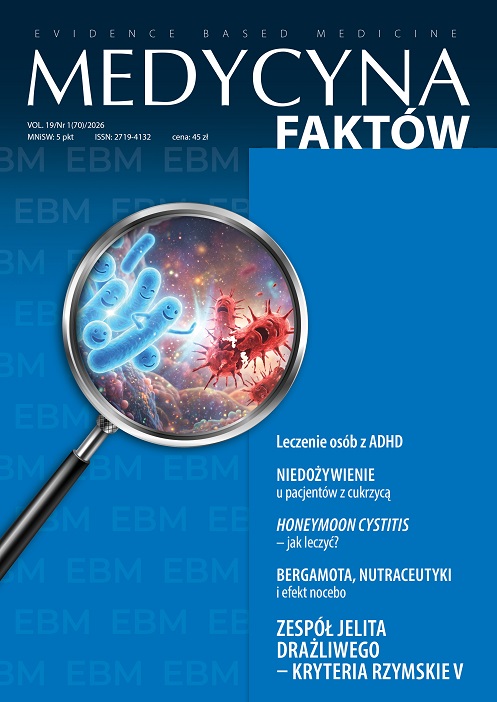
Main Article Content
Abstract
Non-steroidal anti-inflammatory drugs (NSAIDs) are one of the most commonly used drugs around the world. Via inhibition of cyclooxygenase (COX) enzyme, which appears in two isoforms – COX-1 and COX-2 – they exhibit anti-inflammatory, analgesic, and anti-pyretic effects. The diverse chemical structures and slightly different mechanisms of action of individual NSAIDs determine the strength of their effects, as well as the spectrum of the potential adverse events. Shortly after the discovery of acetylsalicylic acid, the harmful gastrointestinal effects of NSAIDs were noticed. Later, at the beginning of the 21st century, it was recognized that the use of NSAIDs may be associated with an increased risk of cardiovascular complications. In clinical practice, the choice between classic (non-selective) NSAIDs and selective COX-2 inhibitors (coxibs) is of particular importance. In patients with a high cardiovascular risk, naproxen is the preferred agent, used together with gastroprotective therapy. In contrast, in the management of patients with a high risk of gastrointestinal complications and no significant cardiovascular burden, coxibs (celecoxib or etoricoxib) may be a more favorable therapeutic option. In patients with both high cardiovascular and gastrointestinal risk, the therapeutic decision should be made individually, after careful consideration of all the risk factors and the potential benefits of NSAID therapy.
Article Details
Copyright by Medical Education. All rights reserved.
References
2. Conaghan PG. A turbulent decade for NSAIDs: update on current concepts of classification, epidemiology, comparative efficacy, and toxicity. Rheumatol Int. 2012; 32(6): 1491-502.
3. Jones R. Nonsteroidal anti-inflammatory drug prescribing: past, present, and future. Am J Med. 2001; 110(1A): 4S-7S.
4. Vane JR. Inhibition of prostaglandin synthesis as a mechanism of action for aspirin-like drugs. Nat New Biol. 1971; 231(25): 232-5.
5. Vane JR, Botting RM. Mechanism of action of nonsteroidal anti-inflammatory drugs. Am J Med. 1998; 104(3A): 2S-8S.
6. Katzung & Trevor’s Pharmacology Examination & Board Review, Eleventh Edition. McGraw-Hill, 2015.
7. Craig CR, Stitzel RE. Modern Pharmacology With Clinical Applications. Sixth Edition. LWW, 2003.
8. Snowden S, Nelson R. The effects of nonsteroidal anti-inflammatory drugs on blood pressure in hypertensive patients. Cardiol Rev. 2011; 19(4): 184-91.
9. Johnson AG. NSAIDs and increased blood pressure. What is the clinical significance? Drug Saf. 1997; 17(5): 277-89.
10. Ruschitzka F, Borer JS, Krum H et al. Differential blood pressure effects of ibuprofen, naproxen, and celecoxib in patients with arthritis: the PRECISION-ABPM (Prospective Randomized Evaluation of Celecoxib Integrated Safety Versus Ibuprofen or Naproxen Ambulatory Blood Pressure Measurement) Trial. Eur Heart J. 2017; 38(44): 3282-92.
11. Sowers JR, White WB, Pitt B et al. The Effects of cyclooxygenase-2 inhibitors and nonsteroidal anti-inflammatory therapy on 24-hour blood pressure in patients with hypertension, osteoarthritis, and type 2 diabetes mellitus. Arch Intern Med. 2005; 165(2): 161-8.
12. Johnson AG, Nguyen TV, Day RO. Do nonsteroidal anti-inflammatory drugs affect blood pressure? A meta-analysis. Ann Intern Med. 1994; 121(4): 289-300.
13. Kearney PM, Baigent C, Godwin J et al. Do selective cyclo-oxygenase-2 inhibitors and traditional non-steroidal anti-inflammatory drugs increase the risk of atherothrombosis? Meta-analysis of randomised trials. BMJ. 2006; 332(7553): 1302-8.
14. Rahme E, Pilote L, LeLorier J. Association between naproxen use and protection against acute myocardial infarction. Arch Intern Med. 2002; 162(10): 1111-5.
15. Watson DJ, Rhodes T, Cai B et al. Lower risk of thromboembolic cardiovascular events with naproxen among patients with rheumatoid arthritis. Arch Intern Med. 2002; 162(10): 1105-10.
16. Schjerning Olsen AM, Fosbol EL, Lindhardsen J et al. Duration of treatment with nonsteroidal anti-inflammatory drugs and impact on risk of death and recurrent myocardial infarction in patients with prior myocardial infarction: a nationwide cohort study. Circulation. 2011; 123(20): 2226-35.
17. Olsen AM, Fosbol EL, Lindhardsen J et al. Cause-specific cardiovascular risk associated with nonsteroidal anti-inflammatory drugs among myo- cardial infarction patients – a nationwide study. PLoS One. 2013; 8(1): e54309.
18. McGettigan P, Henry D. Cardiovascular risk with non-steroidal anti-inflammatory drugs: systematic review of population-based controlled observational studies. PLoS Med. 2011; 8(9): e1001098.
19. Fosbol EL, Gislason GH, Jacobsen S et al. Risk of myocardial infarction and death associated with the use of nonsteroidal antiinflammatory drugs (NSAIDs) among healthy individuals: a nationwide cohort study. Clin Pharmacol Ther. 2009; 85(2): 190-7.
20. Coxib and traditional NSAID Trialists’ (CNT) Collaboration; Bhala N, Emberson J, Merhi A et al. Vascular and upper gastrointestinal effects of non-steroidal anti-inflammatory drugs: meta-analyses of individual participant data from randomised trials. Lancet. 2013; 382(9894): 769-79.
21. Steering Committee of the Physicians’ Health Study Research Group. Final report on the aspirin component of the ongoing Physicians’ Health Study. N Engl J Med. 1989; 321(3): 129-35.
22. Antithrombotic Trialists Collaboration. Collaborative meta-analysis of randomised trials of antiplatelet therapy for prevention of death, myocardial infarction, and stroke in high risk patients. BMJ. 2002; 324(7329): 71-86.
23. Catella-Lawson F, Reilly MP, Kapoor SC et al. Cyclooxygenase inhibitors and the antiplatelet effects of aspirin. N Engl J Med. 2001; 345(25): 1809-17.
24. MacDonald TM, Wei L. Effect of ibuprofen on cardioprotective effect of aspirin. Lancet. 2003; 361(9357): 573-4.
25. Hohlfeld T, Saxena A, Schror K. High on treatment platelet reactivity against aspirin by non-steroidal anti-inflammatory drugs – pharmacological mechanisms and clinical relevance. Thromb Haemost. 2013; 109(5): 825-33.
26. Alqahtani Z, Jamali F. Clinical Outcomes of Aspirin Interaction with Other Non-Steroidal Anti-Inflammatory Drugs: A Systematic Review. J Pharm Pharm Sci. 2018; 21(1s): 29854.
27. Capone ML, Tacconelli S, Sciulli MG et al. Clinical pharmacology of platelet, monocyte, and vascular cyclooxygenase inhibition by naproxen and low-dose aspirin in healthy subjects. Circulation. 2004; 109(12): 1468-71.
28. Williams BS, Buvanendran A. Nonopioid analgesics: NSADs, COX-2 inhibitors, and acetaminophen. In: Essentials of Pain Medicine. Third Edition. Benzon HT, Raja SN, Liu SS (eds.). Saunders, 2011.
29. Silverstein FE, Faich G, Goldstein JL et al. Gastrointestinal toxicity with celecoxib vs nonsteroidal anti-inflammatory drugs for osteoarthritis and rheumatoid arthritis: the CLASS study: A randomized controlled trial. Celecoxib Long-term Arthritis Safety Study. JAMA. 2000; 284(10): 1247-55.
30. Deeks JJ, Smith LA, Bradley MD. Efficacy, tolerability, and upper gastrointestinal safety of celecoxib for treatment of osteoarthritis and rheumatoid arthritis: systematic review of randomised controlled trials. BMJ. 2002; 325(7365): 619.
31. Feng X, Tian M, Zhang W et al. Gastrointestinal safety of etoricoxib in osteoarthritis and rheumatoid arthritis: A meta-analysis. PLoS One. 2018; 13(1): e0190798.
32. Laine L, Curtis S, Cryer B et al. Assessment of upper gastrointestinal safety of etoricoxib and diclofenac in patients with osteoarthritis and rheumatoid arthritis in the Multinational Etoricoxib and Diclofenac Arthritis Long-term (MEDAL) programme: a randomised comparison. The Lancet. 2007; 369: 465-73.
33. Burmester G, Lanas A, Biasucci L et al. The appropriate use of non-steroidal anti-inflammatory drugs in rheumatic disease: opinions of a multidisciplinary European expert panel. Ann Rheum Dis. 2011; 70(5): 818-22.
34. Scarpignato C, Lanas A, Blandizzi C et al. Safe prescribing of non-steroidal anti-inflammatory drugs in patients with osteoarthritis – an expert consensus addressing benefits as well as gastrointestinal and cardiovascular risks. BMC Med. 2015; 13: 55.
35. Samborski W, Filipiak KJ, Kaczmarczyk J et al. Niesteroidowe leki przeciwzapalne a powikłania sercowo-naczyniowe i gastroenterologiczne – algorytm wyboru. Choroby Serca i Naczyń. 2016; 13(4): 257-64.
36. Visseren FLJ, Mach F, Smulders YM et al.; ESC National Cardiac Societies; ESC Scientific Document Group. 2021 ESC Guidelines on cardiovascular disease prevention in clinical practice. Eur Heart J. 2021; 42(34): 3227-337.
37. Moore N, Pollack C, Butkerait P. Adverse drug reactions and drug-drug interactions with over-the-counter NSAIDs. Ther Clin Risk Manag. 2015; 11: 1061-75.
38. Kurth T, Glynn RJ, Walker AM et al. Inhibition of clinical benefits of aspirin on first myocardial infarction by nonsteroidal antiinflammatory drugs. Circulation. 2003; 108(10): 1191-5.